What is the Difference Between Boots and Shoes?
In the ever-evolving world of footwear, the distinction between boots and shoes is both significant and nuanced. Renowned footwear expert Robert Lane once stated, “Boots provide protection and style, while shoes offer comfort and versatility.” This highlights the essence of both categories.
Boots are generally designed for harsher weather conditions or specific activities, such as hiking or work. They often feature higher ankle support. Shoes, on the other hand, tend to focus on daily wear, emphasizing comfort and ease. Yet, the lines can blur, and some may find it challenging to choose between them.
As the industry shifts towards innovation, it's crucial to reflect on these distinctions. The introduction of smart technologies in footwear is transforming how we approach both boots and shoes. However, with so many options available, consumers might feel overwhelmed. Understanding the purpose behind each design is essential for making informed choices in the "Boots Shoe" market.

Definition of Boots and Shoes
Boots and shoes serve different purposes but share some similarities. Both are essential components of our footwear collection. Shoes are typically designed for comfort and versatility. They come in various styles, from casual sneakers to formal dress shoes. Shoes often have a lower cut, making them easier to slip on and off.
Boots, in contrast, are taller and offer more coverage. They protect the ankles and provide additional warmth. Boots can be both functional and fashionable. Various types are available, including hiking boots and fashion boots. The choice often depends on the weather or specific activities.
Choosing between boots and shoes can be tricky at times. Many people have a favorite but forget the benefits of the other. Sometimes, we overlook the need for proper support or comfort. It’s helpful to reflect on our choices. What is suitable for one occasion may not fit another. Being mindful of these differences can enhance our wardrobe.
Historical Evolution of Boots and Shoes
The history of boots and shoes is rich and varied. Boots date back thousands of years. Early versions were made from animal hides and leather. They served practical purposes, providing protection for the feet during hunting and survival. Over time, styles further evolved. Roman soldiers wore sturdy boots, while peasants opted for simpler designs.
Shoes, on the other hand, have their own unique journey. Ancient Egyptians crafted sandals from reeds, practical for hot climates. As civilizations progressed, shoes became more intricate. In the Middle Ages, they reflected social status, with pointed toes and elaborate decorations. But not all designs were practical. Some styles hindered walking and caused discomfort.
Both boots and shoes have evolved significantly. Materials changed from natural to synthetic, reflecting cultural shifts. Today, comfort often competes with style. While modern options abound, one must reflect on balance. Fashion shouldn't overshadow functionality. In choosing footwear, we face a dilemma—look good or feel good? This question remains as relevant as ever.
Historical Evolution of Boots and Shoes
This chart illustrates the historical evolution of boots and shoes, showcasing the increase in the number of styles developed from ancient times to the present day.
Key Functional Differences Between Boots and Shoes
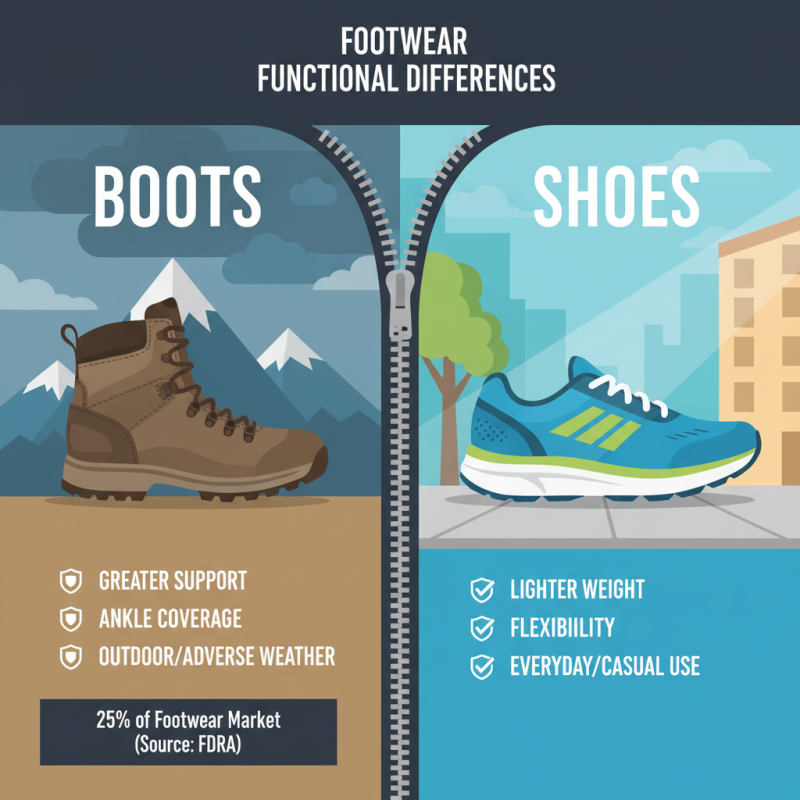
Boots and shoes are often classified by their functional differences. Boots are designed to provide greater support and protection. They typically cover the ankle and sometimes extend higher. This design is ideal for various outdoor activities and adverse weather conditions. According to a recent report from the Footwear Distributors and Retailers of America (FDRA), boots represent about 25% of the footwear market. Their popularity stems from the practicality they offer in terms of durability and support.
Shoes, on the other hand, often prioritize comfort and style. They usually have a lower cut, allowing for more flexibility in movement. The same FDRA report indicates that the casual footwear segment, which includes sneakers and sandals, constitutes about 50% of the market. This reveals a consumer preference for lightweight options. Yet, one must consider that comfort does not always equate to support. Many shoes lack the rigid construction of boots, which can lead to issues like poor posture over time.
In some cases, the line between boots and shoes blurs. For instance, some shoes offer added cushioning but fall short in providing ankle support. This presents a challenge when choosing the right footwear for various activities. Not all consumers consider the long-term implications of their choice. Reflecting on these functional differences can help individuals make informed decisions that align with their needs.
Common Materials Used in Boots and Shoes
When exploring boots and shoes, the materials used play a crucial role. Leather, synthetic fabrics, rubber, and canvas are common choices. Leather offers durability and comfort. It allows for breathability, making it popular for both shoes and boots. In fact, reports indicate that the leather market is projected to grow exponentially, reaching a value of over $400 billion by 2026.
Synthetic materials have also gained popularity. They are often lighter and more affordable. Reports show that the synthetic footwear market is expected to rise significantly, driven by innovations. For instance, materials like EVA and PU provide excellent cushioning and support. These materials help create affordable options without sacrificing quality.
However, both types face challenges. Leather production has environmental impacts. Sourcing sustainable leather remains a concern. Synthetic alternatives also raise questions. While often cheaper, they can contribute to microplastic pollution. As consumers, staying informed about these materials is vital. Understanding the impact of our choices allows for more responsible shopping.
What is the Difference Between Boots and Shoes? - Common Materials Used in Boots and Shoes
| Type |
Description |
Common Materials |
Uses |
| Boots |
Footwear that covers the ankle and sometimes extends to the leg. |
Leather, Rubber, Synthetic Materials, Suede |
Hiking, Work, Fashion, Cold Weather |
| Shoes |
General term for footwear that covers the foot without extending above the ankle. |
Canvas, Leather, Faux Leather, Rubber |
Casual Wear, Sports, Formal Events, Daily Use |
| Hiking Boots |
Sturdy footwear designed for hiking and outdoor activities. |
Leather, Gore-Tex, Synthetic Fabrics |
Outdoor Activities, Trekking |
| Sneakers |
Comfortable athletic shoes for sports and casual use. |
Mesh, Rubber, Foam, Synthetic |
Exercise, Casual Wear, Sports |
Popular Styles and Their Specific Uses
When exploring footwear, understanding the differences between boots and shoes is essential. Each style serves distinct purposes. According to a recent industry report, boots represent about 25% of the global footwear market. They are often designed for specific activities like hiking, construction, and cold-weather protection. For instance, hiking boots provide ankle support and grip, reducing the risk of injuries on rugged terrain.
On the other hand, shoes tend to dominate the casual and formal categories, making up approximately 75% of the market. Sneakers and loafers are staples for everyday use, often balancing comfort and style. However, many people overlook their specific uses. Sneakers, for example, are great for light exercise, but they lack the support needed for long-distance running. This inconsistency in choice can lead to discomfort and even injuries.
It’s crucial to reflect on your footwear needs. The right pair can enhance performance and comfort. Yet, many still wear inappropriate styles for certain activities. Rethinking your choices when picking shoes or boots could lead to better experiences. Details matter— like sole materials, fit, and support. These factors heavily influence how well your footwear performs in various scenarios.